


Elevate Your Core Directory
Replace Microsoft Active Directory with all-in-one access control and device management in the cloud, securely connecting your users to virtually all of their IT resources with a single identity and zero on-premises hardware
AD Reimagined in the Cloud
JumpCloud takes the concept of the directory service and delivers it on-demand from the cloud — no hardware required. Use JumpCloud to centralize your identities, manage user access to devices and IT resources, control device settings, and more.
Auth to Cloud Resources
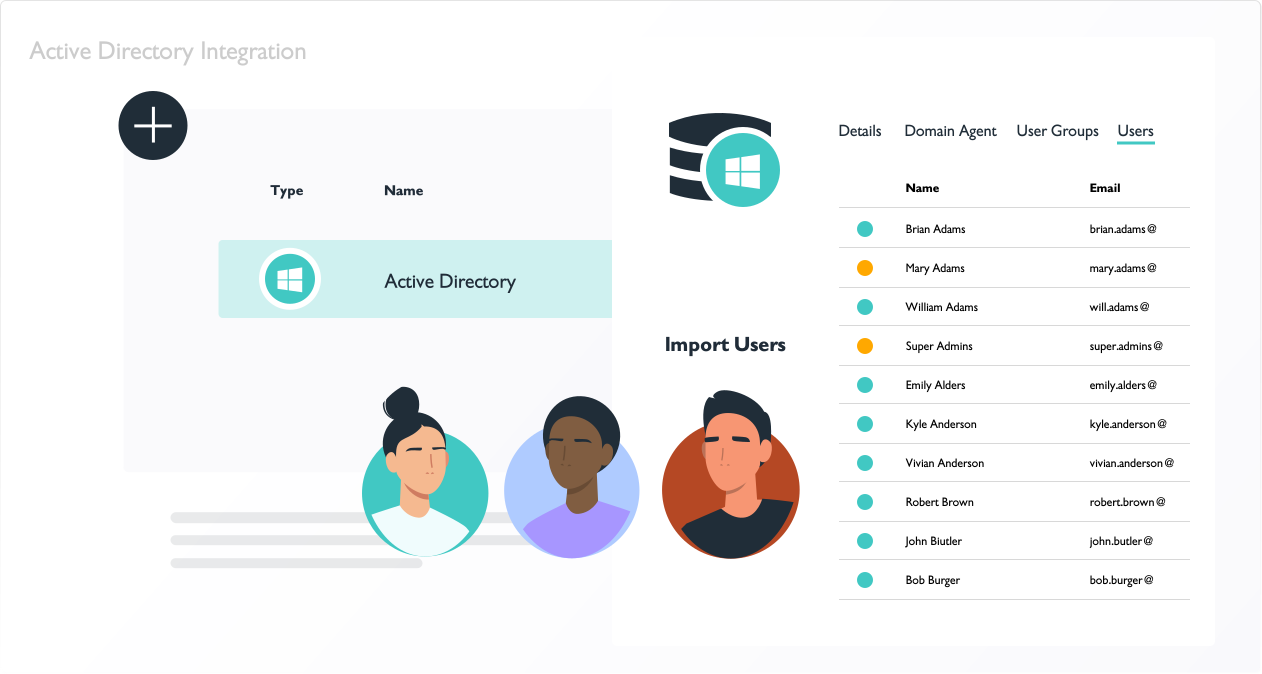
Provision user identities and access to your organization’s work apps through SAML and OpenID Connect (OIDC), Just-in-Time (JIT), and SCIM. Integrate with Google Workspace, Microsoft 365, and HRIS platforms to unify your identities and lifecycle management.
Extend Identities to Any OS
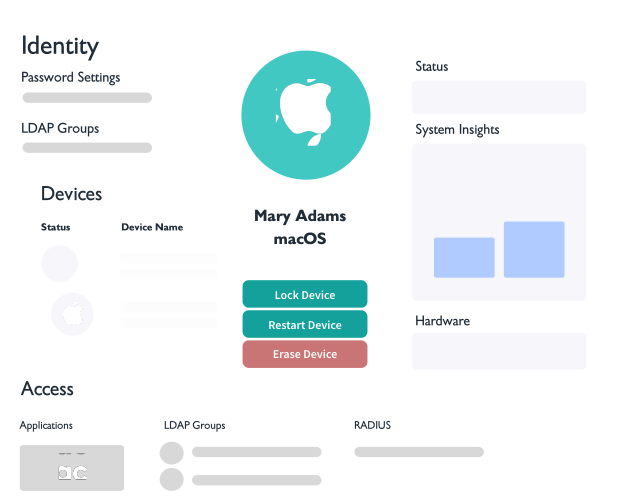
JumpCloud supports Windows, Mac, and Linux authentication and provides group-based access and policy management to control device settings. Enforce MFA upon login and use Conditional Access controls to enforce Zero Trust device security.
Easy Migration
The Active Directory Migration Utility (ADMU) helps companies easily migrate Windows systems to JumpCloud from existing Active Directory domain environments. The tool converts domain-bound Windows user profiles to local profiles that can be managed by JumpCloud, with all user attributes preserved.
Extend AD
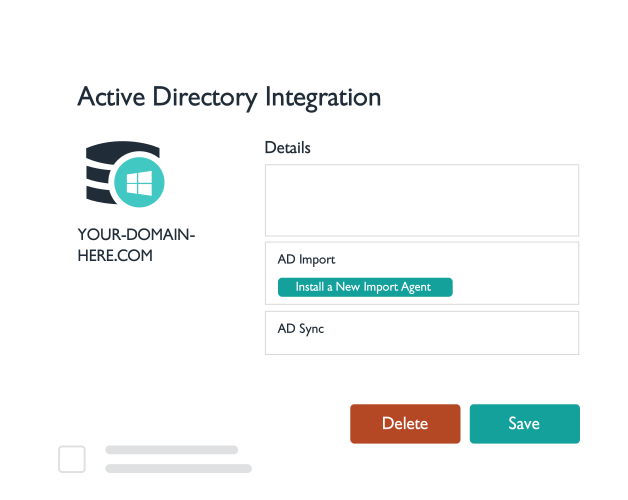
If your organization is considering replacing your AD but not quite ready to do so, use JumpCloud’s Active Directory Integration feature to extend your on-prem AD identities to non-domain resources like Mac, Linux, web apps, and more. With bi-directional identity sync, AD Integration lets you fully manage your AD users remotely from the cloud.
One Open Directory Platform for All
Whether in the cloud or on-prem, your identities, devices, and access can be securely managed from a single platform — regardless of where employees work. No need for point solutions to manage non-Microsoft products like Google Workspace, macOS, Zoom, or Slack.
Optimize TCO
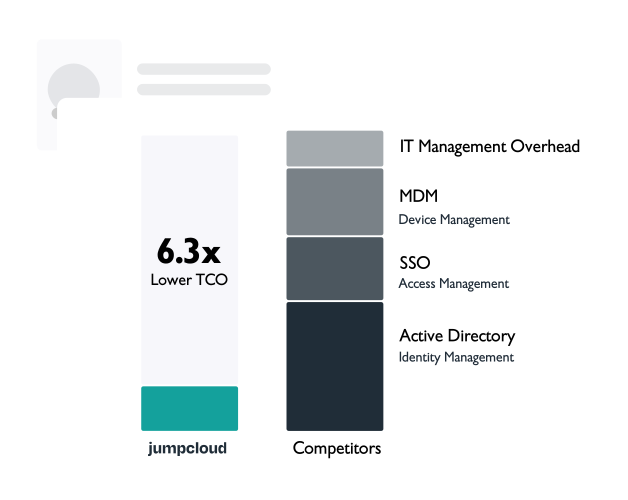
How much are you really paying for AD? Besides obvious costs like hardware and software, AD has hidden costs like maintenance, add-on software as well as network equipment. The JumpCloud open directory platform offers a cost-effective solution that covers all aspects of managing your identity, device and access in one tool — no point solutions required.
On-Demand Webinar
| The True Total Cost of Operating Core IT Infrastructure in the CloudCase Study
| Sapling: Eliminating Point Solutions & Streamlining ITBlog
| Total Cost of Ownership of Azure AD
Solutions that Modernize A.D.
Modernize Directory Services with a cloud-based open directory platform that delivers all-in-one directory, identity, access, and device management to securely grant your users the right access to all IT resources they need.
Open Directory Platform
Securely manage identities and access for your users across all of the devices, applications, files, resources, and networks they need to do their jobs.
Learn MoreUnified Authentication
Grant your users secure, frictionless access to all the resources they need, including single sign-on to web and on-premises applications, unified authentication to legacy systems, and conditional access and multi-factor authentication across all resources.
Learn MoreUser Lifecycle Management
One identity, one credential, one platform to unify and automate your user identity and access management needs - with identities coming from anywhere for access to anything.
Learn More


Additional Resources
Watch this on-demand webinar to see how one IT admin chose to forgo Active Directory and consolidate his identity and access management needs with JumpCloud.
Read this eBook to see why now is the time for IT admins to get rid of their AD instance and move to the cloud.
Learn about how Active Directory has failed modern IT admins and how shifting to a domainless model can help control disparate users and resources.