



The Human Side of AI Readiness: Skills, Stress, and the New IT Mindset
A Framework for Reducing Toil and Upskilling for the Future
Table of Contents
The Leadership Setback and AI
Challenges and Opportunities: Escaping the Maintenance Trap
Key Insights: The Dual Reality of AI
Framework for Change: Centralize, Formalize, and Invest
Actionable Steps: Your 24-Hour Mandate
Architect Your Team’s Freedom
About the Author
The Leadership Setback and AI
When we talk about leading through change, the conversation usually goes straight to the shiny new features. We think about faster chips, the latest generative models, and intelligent agents. But as IT leaders, we know that change does not happen in a vacuum.
It happens right in the middle of our existing tech debt.
Our Q1 2026 IT Trends Report highlights a maturity gap that should serve as a wake-up call. Right now, 40% of IT leaders believe they are “AI mature.”
They feel they have arrived. But when we look under the hood at their actual infrastructure, objective scoring reveals that only 22% are truly ready for AI.
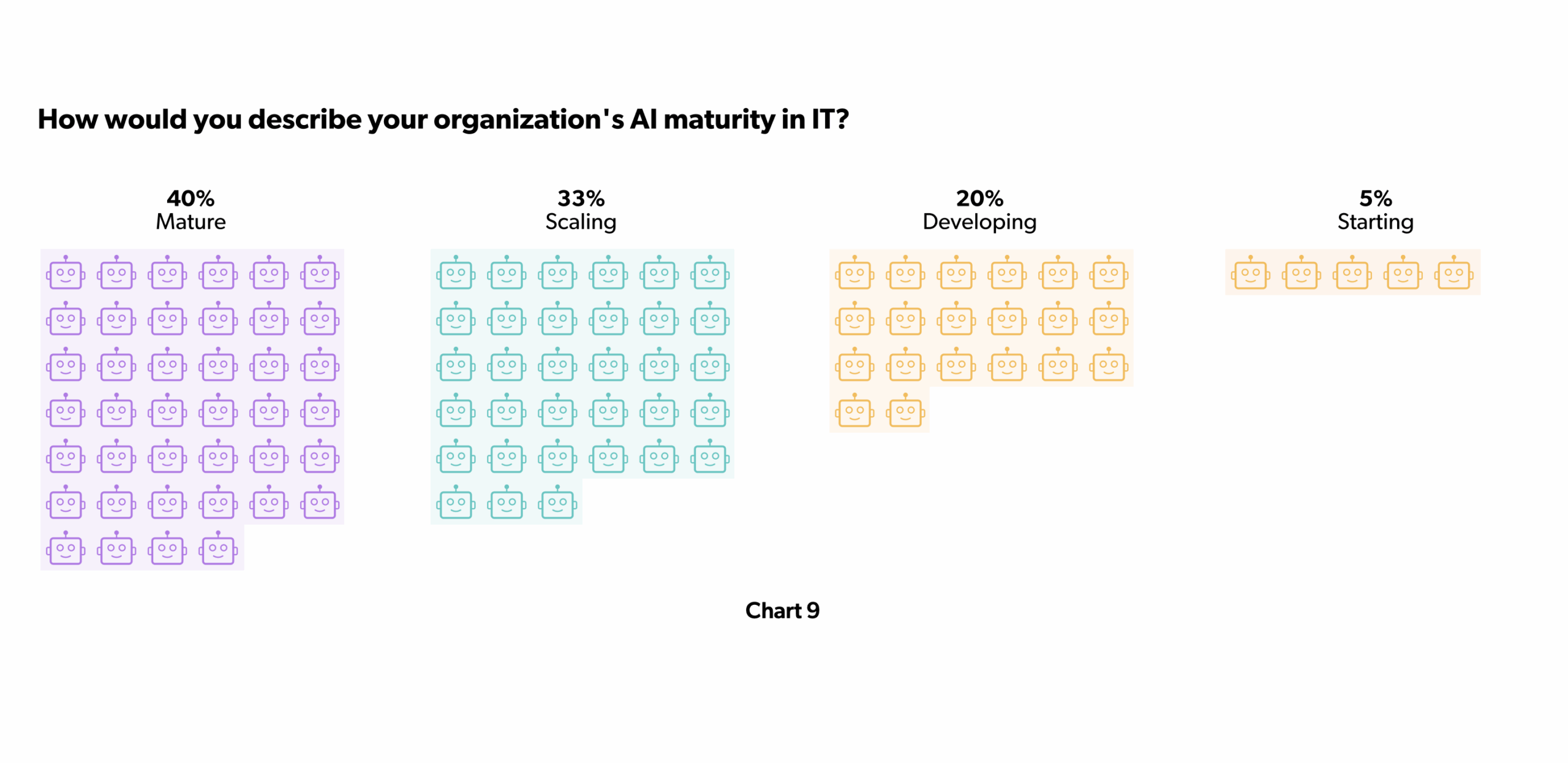
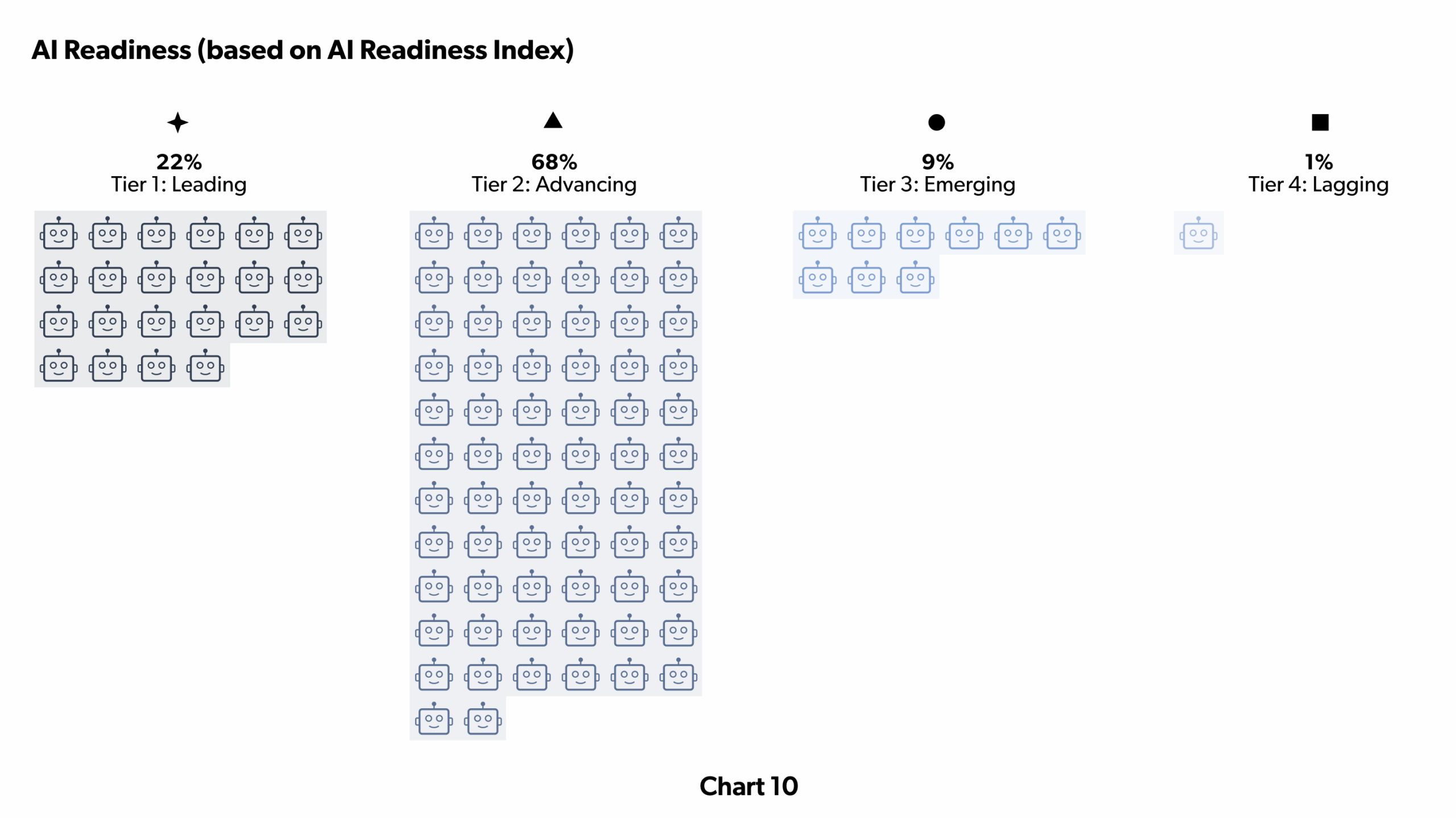
That gap is where the danger lives.
If we try to layer the intelligence of AI on top of a fragmented, legacy foundation, we aren’t accelerating our business. We are just accelerating our complexity. We add more noise to an environment that is already way too loud.
This guide is not about how AI changes your tech stack. It is about how AI changes your mandate as a leader.
Unification is no longer a nice-to-have. It is the only way to move your team out of the manual grind and back into strategic innovation.
Let’s explore how to bridge the readiness gap and lead your team securely into the future.
Challenges and Opportunities: Escaping the Maintenance Trap
If you manage an IT environment, your daily reality is often what we call the “maintenance trap.”
You hire brilliant engineers and admins who want to build the future, but they spend 70% of their week just trying to keep the lights on.
They patch vintage servers, chase down identity silos, and wrestle with a sprawl of tools that refuse to communicate.
-

The Current State
IT teams are overwhelmed. We no longer just manage hardware; we manage a sprawling ecosystem of identities, devices, and cloud apps.
The tools meant to help us have actually created new kinds of work and administrative overhead.
-
The Catalyst
AI is no longer on the horizon. It is here. Nearly every organization (99.6%) is either already using AI or has it on their roadmap for this year.
AI is the air we breathe right now. But we have to stop treating it like just another tool. We must treat it as the foundation of how we rebuild our IT environments.

The opportunity before us is immense. By addressing the root cause of our IT toil, i.e., fragmentation, we can transform AI from a risky experiment into a secure engine for growth and efficiency.
Key Insights: The Dual Reality of AI
AI presents a double-edged sword for IT professionals. We are seeing a dual reality in our departments.
On one side, 56% of daily users see AI as a massive time-saver and stress reducer. They close tickets and automate scripts faster than ever.
However, 38% state that while AI is helpful, it adds a layer of complexity they were not prepared for. As leaders, our goal is to expand that 56% and shrink the 38% by removing the friction caused by poorly integrated tools.
For anyone still skeptical, the return on investment is measurable. Over 92% of IT leaders report direct productivity gains from AI. These gains do not just come from chatting with a bot. They come from real cost savings and improved threat detection. AI frees up teams from repetitive work and helps us find needles in haystacks. This is how we move from reactive to proactive IT management.
Your Team Is Evolving
One of the biggest fears surrounding AI is that it will replace our teams. The data tells a different story. Only 16% of leaders anticipate a reduction in headcount due to AI.
Instead, 50% of leaders expect to add new roles and skills within the next one to two years. We are not getting rid of people; we are evolving them. We are moving away from manual provisioning and toward roles focused on AI integration, data governance, and security orchestration.
The Risk of the Disconnect
This transition brings new challenges. Half of IT teams struggle to integrate AI into existing workflows, and 46% are worried about new risks and legal exposure. Furthermore, 60% of IT leaders feel AI is moving faster than their ability to protect their organization.
This leads to the crisis of shadow AI. A staggering 61% of organizations are dealing with employees using unsanctioned AI tools. Without visibility, you cannot govern your data. We must shift away from asking what AI can do, and start asking how we secure what AI is doing.
The Framework for Change: Centralise, Formalise, and Invest
We cannot just tell our teams to be more careful. We need a structural response to a structural shift. This framework is designed to move us away from whack-a-mole IT management and toward a unified, AI-ready posture. It consists of three core pillars.
Pillar 1: Centralize Your Foundation
You cannot secure what you cannot see. Fragmented tools cause administrative overhead, inconsistent policies, and massive security gaps. Almost half of IT leaders (46%) believe IT unification is critical for scaling AI securely.
Your first step is to centralize identity and access management (IAM).
An overwhelming 85% of leaders agree that secure IAM is the absolute bedrock for successful AI adoption. If we do not have a single source of truth for who—and what—is accessing our resources, we frankly do not have a security posture at all. We must consolidate our identity stack to gain the visibility required for the AI era.
Pillar 2: Formalize Governance
Policies are meaningless without enforcement. We must move beyond loose guidelines and build technical guardrails. We need tool-specific security settings so our proprietary data does not end up in a public training set.
Use a unified platform to gain visibility and enforce rules consistently. Right now, successful teams are implementing core practices:
65% use role-based access controls (RBAC) specifically for AI
63% maintain a formal AI policy
61% have active AI monitoring in place
These measures form the bedrock of effective AI governance. They reduce risk and eliminate guesswork for your team.
Pillar 3: Invest in Your People
The new roles created by AI must be filled. Investing in your current team is the most effective way to bridge the skills gap.
Currently, 67% of organizations run formal upskilling programs.
Focus your training on the top skills gaps: AI integration and risk management. Partner with your legal and compliance teams to train your staff on the ethical and secure use of AI.
Actionable Steps: Your 24-Hour Mandate
As an IT leader, your role in this ascent is to be the lead climber. You look ahead, spot the hazards before the team reaches them, and most importantly, you set the anchors. Here is your 24-hour mandate to start the journey:
-
Be Honest About the Gap
Take the IT trends report data back to your leadership. Look at the discrepancy between the 40% who feel mature and the 22% who are actually ready. Ask your executive team: Are we truly ready for secure AI at scale, or are we just telling ourselves we are? Audit your foundational readiness.
-
Audit the Toil
Go talk to your senior engineers and system admins. Ask them to identify the one manual, soul-crushing task that stops them from working on top-tier AI initiatives. Identify the exact points where tool sprawl drains their time.
-
Set the Anchors
Start the move toward a unified platform. Stop fighting a fragmented stack and start scaling a unified one. Centralise your identities—both human and non-human—so you can enforce the principle of least privilege across your entire technology environment.
Architect Your Team’s Freedom
The road toward harnessing the full potential of AI is complex, but the path is clear. Unification is the essential mandate for the modern enterprise.
When your team returns to their desks tomorrow, they will face the same maintenance trap they always have.
They will be tempted to keep managing the sprawl because that is the legacy standard they know. Your job is to architect their freedom.
By unifying your foundation and moving toward a single, intelligent control plane, you do much more than cut costs.
You give your team their time back. You give them the headspace to innovate. If we follow this framework, i.e., centralizing the foundation, formalizing governance, and investing in our people, we transform AI from a source of friction into a true force multiplier.
The summit of intelligent, secure IT is right in front of us. We just have to climb a better route to get there.
About the Author
Andrew Hendrickson is the Senior Manager of Engineering at JumpCloud. He manages escalation engineering and developer experience teams while also heading up the IT department. With a deep focus on reducing IT toil and driving strategic innovation, Andrew is passionate about helping organizations build unified, secure foundations for the future of work.
Looking for More??
Check out all the great sessions from this year's JumpCloudLand virtual conference. You can watch every session on demand and on your schedule.
Get Started Today