Maximizing Margin: How Channel Partners Use a Unified Stack to Beat Sprawl
Tool sprawl is quietly draining margins from channel partners around the world. For more than 10 years, the identity, access, and device management space has been filled with point solutions.
Each one solves a small piece of the puzzle. Together, they create a tangled stack that is hard to manage, expensive to maintain, and difficult to scale.
This eBook is for channel partners who want to build a more profitable, scalable practice in 2026.
That means MSPs, resellers, and system integrators alike. You will learn how tool sprawl impacts your business and your customers.
You will see how a unified platform changes the math. And you will discover which conversations open the door to bigger deals.
Let’s get started.
The Tool Sprawl Problem
Tool sprawl is a silent drag on efficiency, scale, and profitability. It hurts both partners and the customers they serve.
Here is what tool sprawl looks like in practice:
-
Too many point solutions across identity, device, access, and security
-
Constant context switching for technicians
-
Fragmented workflows that are hard to build and maintain
-
Licensing sprawl with overlapping tools, renewals, and true-ups
-
High training costs for every new tool
-
Operational drag that compresses partner margins
For your customers, the pain is just as real. They juggle dozens of vendors. They pay for features they do not use. Every new tool adds another integration to support.
The New Layer: AI Adoption
There is a new layer to this problem: AI adoption. Companies want to build smart workflows that boost productivity and cut costs. But tool sprawl gets in the way.
The more tools a customer runs, the harder and more expensive it becomes to integrate AI into the business.
The data reinforces this reality.
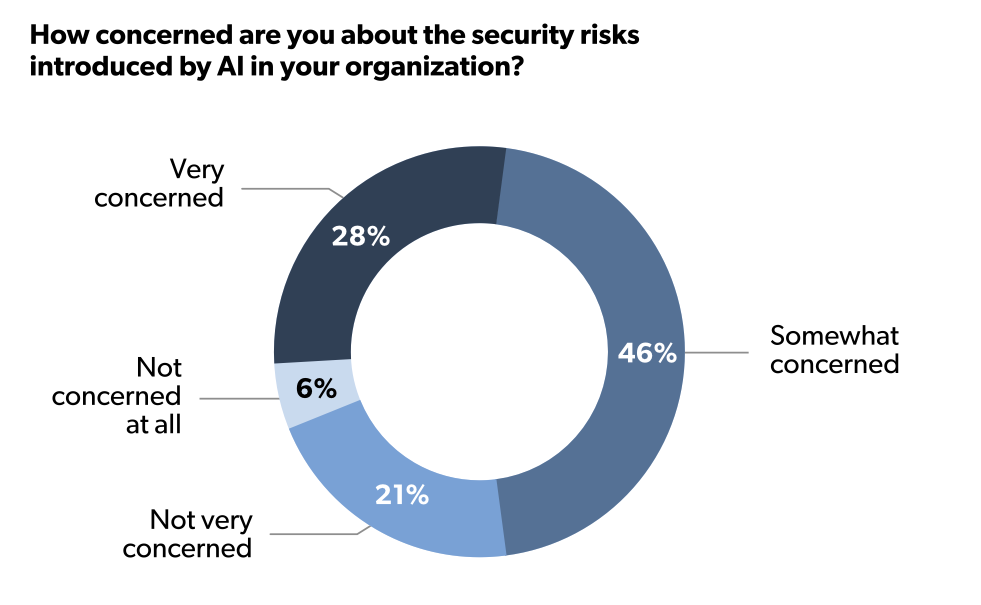
Approximately 74% of enterprises admit to being preoccupied with the security vulnerabilities that AI deployment invites.
Furthermore, 45% of IT decision-makers identify a lack of transparency regarding AI applications as a primary obstacle to safe implementation. Organizations tethered to fragmented tech stacks risk losing their competitive edge.
The path forward is evident.
Partners who facilitate stack consolidation will be the ones to dominate the coming decade.

JumpCloud unifies identity, access, and device management under one platform. Your customers can run Mac, Windows, or Linux. They can use Google Workspace or Microsoft 365. They can bring their own HR system or identity source.
JumpCloud connects it all.
The result is one platform that delivers:
-

Identity management
-
Single sign-on (SSO) and multi-factor authentication (MFA)
-
Device management across every operating system
-
Password management
-
Cloud RADIUS and LDAP
-
Conditional access and Zero Trust controls
-
SaaS and AI app discovery
-
Privileged access management (PAM)
-
Asset management

For your customers, this means lower total cost of ownership (TCO), simpler operations, and stronger security.
For you, it means fewer tools to deploy, fewer renewals to manage, and more time to focus on high-value services.
JumpCloud also acts as the glue that connects best-in-breed tools. Your customers no longer have to commit to a single monolithic vendor stack. They can pick the productivity tools, AI platforms, and SaaS apps that fit their business. JumpCloud ties it all together with consistent identity and access controls.
Five Conversations That Open Doors
Our most successful partners use specific conversation starters to surface tool sprawl. These openers help move customers toward consolidation. Here are five of the highest-impact entry points.

Most IT teams underestimate how many SaaS and AI tools their employees actually use. That blind spot creates security risks, compliance gaps, and unpredictable costs.
Run a discovery exercise inside a prospect’s environment. Use JumpCloud’s SaaS Management module to inventory every app and account in use. Then deliver a report. Compare what the customer thinks is in play versus what is actually in play. The gap is almost always eye-opening. It leads directly to a unification conversation.

Every customer wants to build smarter workflows. Few are ready for them. The reason is simple: clean, connected data is required, and tool sprawl makes that hard.
Offer an AI workflow readiness assessment. Walk through your customer’s current manual workflows. Map their existing tech stack. Then show them what needs to change before agentic automation can deliver value. In most cases, the recommendation is to unify identity, access, and device management first. That sets the foundation for every workflow that follows.

There is a natural disconnect between when an employee is hired and when they become productive. HR teams handle the hire. IT teams handle the access.
Most organizations bridge that gap manually.
Start the conversation around the joiner-mover-leaver flywheel:
How does the customer onboard new hires today?
How is access updated when roles change?
How is access revoked when someone leaves?
JumpCloud connects with leading HRIS platforms and turns identity into a business-aligned control layer. The result is automated provisioning, faster productivity, and tighter security.

Security incidents and audit pressure are rising. Customers feel it. Many still rely on inconsistent MFA, fragmented access controls, and unmanaged devices.
Help customers assess how access is granted, enforced, and revoked across their environment. Identify gaps. Highlight manual controls. Then introduce JumpCloud’s centralized identity-driven security policies, conditional access, and Zero Trust enforcement. A unified platform gives customers visibility and control across users, devices, and apps.
All from one console.

IT budgets keep growing, but customers want efficiency. Many pay for overlapping tools, unused licenses, and renewals they never use.
Inventory the customer’s tools, licenses, and renewal cycles. Quantify the operational cost on top of the license cost. Then show them how JumpCloud consolidates multiple point solutions into one platform.
Fewer vendors.
Fewer renewals.
Lower training costs.
Better outcomes.
Key Takeaways
If you want to grow margin and build a more durable channel practice in 2026, you should focus on three steps:
Tool sprawl is the root cause of most customer pain. From rising costs to slow AI adoption, it shows up everywhere. Use one of the five entry points to start the conversation. Reframe the discussion from tools to outcomes.
Customers who unify their stack today are the ones who can take advantage of agentic workflows tomorrow. Help them see consolidation as a strategic investment, not just a cost-cutting move.
New regional leadership, an upgraded portal, and a unified program give you more support than ever. Engage with your channel manager early and often. You have to make the most of what is available.
Tool sprawl is a problem you can solve.
For your customers, and for your own business. A unified platform gives your customers better security, lower costs, and a foundation for AI. It gives you a more profitable practice with fewer tools to manage and more room to grow. Your feedback continues to shape how JumpCloud evolves the partner experience, tools, and enablement.
Reach out to us!