Stop Looking for the Needle in the Haystack
How Managed Service Providers Should Rethink Total Cost of Ownership and Opportunity
You built your MSP business to solve problems. When a client faces a challenge, your immediate instinct is to fix it. This dedication is exactly why your clients trust you with their infrastructure.
However, this approach can lead to a reactive cycle. A customer asks for a new security capability, and you immediately hunt for a specific software license to fulfill that request. You find a point solution, add a small markup, and deploy it to keep the client happy.
To help you break free from this pattern, this guide explores the true cost of fragmented systems, defines comprehensive ownership metrics, identifies hidden operational drains, and reveals how unified platforms drive exponential growth.
The Needle in the Haystack
This cycle can lead to significant problems for your operations. Searching for single-use point solutions is exactly like looking for a needle in a haystack. You spend hours researching, testing, and pricing out the cheapest per-user license.
Once that perfect tool is finally found, the real work begins.
Your IT Team must learn a completely new interface alongside difficult API integrations to manage. They must also attempt to secure the expanding gaps between all these disconnected systems.
Every new tool adds another layer of complexity to your technology stack. This constant search creates operational drag that may prevent you from scaling your business efficiently.
When you rely on fragmented tools, you inadvertently increase your operational burden in several ways:
Valuable hours are wasted evaluating new vendors.
Unfamiliar admin consoles require extensive navigation.
Connections between separate environments remain fragile.
The time, energy, and resources wasted on this constant search are immense. You need a centralised approach to eliminate this unpaid labor and streamline your daily operations.
A new definition of TCO
Before diving into numbers, understanding why Total Cost of Ownership (TCO) matters gives your business a competitive edge. Relying solely on subscription fees obscures the financial impact of maintaining disjointed IT environments.
Grasping the full picture requires critical thinking, because evaluating an asset involves both mathematical and non-mathematical impacts.
In short, TCO represents every input needed to deliver a solution. True evaluation includes six core elements:
-
1
Acquisition Cost
Direct purchase pricing plus engineering resources required for initial setup.
-
2
Integration Cost
Resources necessary to connect platforms with existing architecture.
-
3
Operational Cost
Ongoing effort needed to maintain systems smoothly.
-
4
Training Cost
Investment required to make teams proficient through internal documentation.
-
5
Opportunity Cost
Determining what skilled engineers could achieve if they weren’t managing workflow connections.
-
6
Hidden Costs
Less tangible expenses like staff burnout or constant context switching.
Let us understand this by looking at a practical example.
-
Consider a simple device management solution priced at an attractive $2 per user, per month.
On paper, for 100 users, that’s just $200 a month. However, if that tool requires 15 hours of initial engineering to integrate with your existing identity provider (Acquisition and Integration Cost), and creates 20 hours per month of manual administrative work because of a clunky user interface (Operational Cost), that $200 price tag is an illusion.
When you factor in the hourly rate of your technicians and the Opportunity Cost of what they could be doing instead of troubleshooting, that “inexpensive” tool quietly becomes a problem for your IT team and drains your margins.
-
Every time you add a single-use point solution to your tech stack, your team must spend valuable time doing manual tasks such as:
- Spending hours researching and finding the right solution for the client.
- Investing energy learning and navigating a brand-new administrative interface.
- Wasting cycles implementing and integrating the software into your existing infrastructure.
- Dedicating ongoing effort to maintaining, updating, and securing the system over time.
These fragmented workflows create severe operational inefficiencies.
Why TCO Is Your Key Competitive Advantage
-

Your technology stack is more than just the software you buy; it also surrounds the human effort that is required to use it, the training to maintain it, and the operational drag of context switching.
When you master TCO, you stop reselling commoditized tech and start building margin into every service.
If we evaluate your stack solely by its technological capabilities, we miss the hidden costs of running it. Conducting a thorough Stack Audit helps you visualize exactly how these costs add up.
-
Now is the time to rethink what each tool truly costs to your business.
It’s not just dollars and cents. It’s everything woven into the daily work of your technicians, from onboarding to integration to ongoing support.
When you start measuring the Total Cost of Ownership (TCO) factoring in every hidden drain on your business, the path to greater efficiency and profitability becomes clear.

Want to dive deeper into the math of TCO?
Calculating the Total Cost of Ownership involves multiple variables which are unique to your business. We have broken down the exact accounting math and provided interactive templates in our IT Professionals Complete Guide to Calculating TCO. You can use this guide alongside the interactive JumpCloud TCO Calculator to get a tailored breakdown of what your stack truly costs.
Use the Calculator
The Cost of Context Switching and Hidden Time Drains
In the previous chapter, we established that the true total cost of ownership goes far beyond a monthly license fee. The margin you lose does not come from the tools themselves. It drains away in the empty space between them.
Fragmented tech stacks breed inefficiency.
Every time a technician logs out of one admin console and into another, your business pays a price. We call this the swivel-chair tax. It is the mental and physical toll of constant context-switching across disconnected point solutions.
Take a moment and think about your standard client onboarding process. Your team must jump between multiple screens to provision a single new user or secure a remote endpoint. This disjointed workflow turns high-level troubleshooting into a tedious chore.
The swivel-chair tax actively slows down your service delivery. It also frustrates your best talent and limits your scalability.
The Burden of Integration
You buy tools to solve client problems and streamline operations. However, making those disconnected tools function smoothly is a massive and unpaid labor cost.
When you force separate systems to handle identity, access, and device management, you do not build a solid tech stack… you actually weave a fragile web.
Brittle application programming interface connections and custom scripts require constant maintenance to function properly. Every software update threatens to break the fragile links between your tools.
Your team spends hours patching these gaps instead of focusing on profitable and proactive IT management. You need a centralized approach to eliminate this unpaid labor.
Consolidating these workflows into a “single pane of glass” management style is one of the fastest ways to recover the lost time, which in return, helps in boosting your team’s output.
Audit Checklist
Take a moment to evaluate your technicians’s daily workflows:
-
1
How many tools do you use for device, identity, security, and SaaS management?
-
2
How often do your techs jump platforms for daily tasks?
-
3
Where are you manually copying info or bridging disconnected systems?
-
4
How long does it take to ramp up a new hire across all these systems?
With the foundation of TCO established, now we must examine where margins actually leak away. The next section breaks down three major buckets of hidden time costs that stem from fragmented tech stacks.
Beyond the Swivel-Chair Tax, siloed tools generate extensive hidden time costs across three distinct buckets:
When dashboards are flooded with notifications from disparate systems, reviewing them consumes massive amounts of time. Delays in identifying genuine issues happen because professionals must sift through endless noise.
Maintaining consistent access controls across multiple separate platforms requires redundant manual effort. Resolving diverging standards eats up valuable hours that could be spent elsewhere.
Gathering fragmented logs from scattered software makes compliance assessments a painful process. Proving adherence demands extensive administrative overhead.
The Solution
Moving From Single-Use Tools to a Unified Platform
What if you could finally leave the haystack behind?
By consolidating your core IT functions into a unified platform, you unlock consistent, efficient solutions, right when and where you need them. Instead of being pulled in different directions by one-off tools, this approach provides a reliable system that grows with you and your clients.
When you’re chasing fragmented applications, growth takes a back seat.
By pivoting to a unified open directory system—grounded in four essential pillars (Identity, Access, Devices, and SaaS) YOU lay the groundwork for lasting scalability.
This kind of centralization isn’t about simply trimming the toolset; it’s about building a more intuitive and a reliable way to manage every client environment.
Implementing this framework helps achieve critical business objectives:
-
1
Eliminate context-switching taxes across your support team.
-
2
Reduce application sprawl to lower overall operating expenses.
-
3
Accelerate client onboarding via streamlined provisioning workflows.
-
4
Improve retention by removing tedious administrative chores.
Instead of patching poorly connected software, building solid service packages becomes possible.
A Framework for Your Next Stack Audit
A stack audit is a review of your IT infrastructure and tools. It helps you find redundant apps, fix security gaps, and consolidate operations into a more efficient, profitable model.
Here’s a framework to evaluate your setup:
Begin by compiling a comprehensive list of every software and hardware solution your IT team uses. This includes everything tied to your core IT pillars, from identity and access management to device security and network control.
Document how these disparate tools interact with one another. Identify where your team has built manual “bridges” or processes to connect systems that don’t integrate seamlessly. Where are the points of friction?
Interview your technicians to quantify the time they lose to context switching, managing multiple dashboards, and performing rework caused by system fragmentation.
Go beyond subscription fees. Factor in the hidden costs of your stack, including excess labor, employee retraining on multiple systems, and the business impact of downtime or security breaches.
Consolidate these findings to reveal the true cost of managing a fragmented toolset. Use a resource like the TCO Calculator to get a tailored breakdown of your total cost of ownership.
CASE STUDY
Stack Audit in Action
Altitude Integrations, a JumpCloud partner, shifted their clients to the cloud for rapid onboarding, centralized management, and better security. Before JumpCloud, they struggled with the limitations of on-premise solutions like Active Directory, which were difficult to scale and maintain.
After consolidating their infrastructure with JumpCloud, Lead Technician Jan Kalkus observed immediate improvements. “We used to have to take hours or days to get something turned around, and now I can do the same thing within minutes,” Kalkus shared.
By leveraging JumpCloud’s platform, Altitude Integrations was able to:
Streamline
Onboarding
New hire onboarding became faster and simpler for both the MSP and its clients.
Unify
Credentials
Clients now use a single set of credentials to access all their resources, improving security and user experience.
Increase
Flexibility
JumpCloud’s protocol-driven approach allowed Altitude Integrations to integrate with their preferred vendors without being locked in.
This move not only increased their operational efficiency but also allowed them to deliver more scalable, resilient, and secure services to their clients.
The Multiplier Effect
Shifting from a product-focused reseller to a service provider is crucial for new revenue and deepening client partnerships.
Clients don’t just want tools; they want secure, reliable, and efficient outcomes.
By designing service packages instead of just managing products, MSPs can deliver greater value.
According to the MSP Playbook for Value-Driven Growth, MSPs that evolve into strategic partners can see client lifetime value increase by up to 40% over three years.
This evolution requires a mindset shift from asking, “Which product do I need?” to “What service outcome can I create for my client with the tools I already have?”
A unified platform is the engine for this transformation. It allows MSPs to rapidly create and differentiate their service offerings, reduce the time and cost associated with onboarding new clients, and lower operational risk by standardizing on an infrastructure they know and control.
The rise of Shadow AI perfectly illustrates why this unified foundation is so critical.
Go Beyond the Stack
MSPs are technologists by design—but your clients aren’t. In this guide, you’ll learn how to shift from a technology-first mindset to a partnership-driven approach that makes it easier to prevent customer churn and win new clients.
Read More Today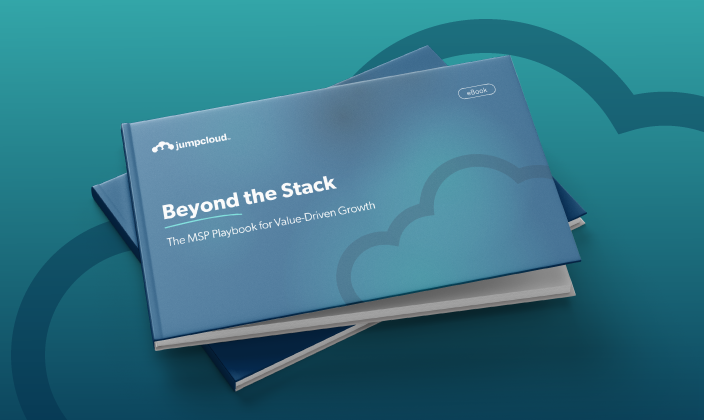
Shadow AI: Business Risk or Opportunity?
When end-users feel bogged down by fragmented or restrictive IT, they find their own solutions.
Shadow AI presents organisations with a dual challenge and opportunity. While the use of unapproved AI tools introduces new operational and security risks, it also serves as a strong indicator of unmet demand and a clear signal for innovation from both employees and customers.
Rather than just buying a new point solution to block these tools, an MSP utilizing a unified platform can quickly adapt to secure them.
By offering managed services for AI discovery, robust governance frameworks, and compliance monitoring, MSPs can help organizations safely integrate these tools, turning a potential risk into a strategic, managed asset.
A unified platform allows IT teams and MSPs to rapidly develop and deploy modernized, high-value services that meet current business needs. This includes accelerating the launch of key offerings such as:
-
Streamlined Zero-touch Onboarding
Implementing a single, automated process for user and device setup that reduces manual effort and minimizes the potential for configuration errors.
-
Comprehensive SaaS and Shadow AI Management
Providing visibility and control over all used applications to ensure a more secure environment, which acts as a key element for long-term client retention.
-
Proactive Compliance Automation
Facilitating a smoother audit process by automating the collection and maintenance of required compliance documentation, thereby reducing the administrative burden on IT teams.
You have transitioned your mindset from selling single-use products to delivering comprehensive services. Now you must apply this mindset to the underlying economics of your Managed Service Provider (MSP) business. This chapter reveals how a consolidated platform stabilizes your core costs and creates a reliable pathway to exponential profit.
Breaking the One-To-One Cycle
The traditional IT service model relies on a dangerous one-to-one cycle. Every time your client needs a new capability, you must purchase a new software license to fulfill that request. This approach tightly couples your revenue growth to your rising software costs.
When your costs rise in tandem with your revenue, your profit margins remain stubbornly flat. You cannot scale a business efficiently when every new service offering requires a new vendor relationship. This cycle restricts your growth potential and limits your overall business valuation.
The Platform Economic Model
A unified open directory platform breaks this restrictive economic cycle completely. When you consolidate your core IT functions, your baseline operational expenses finally stabilize. You no longer need to procure a new tool for every emerging client demand.
A consolidated platform allows you to achieve several crucial financial objectives:
-
Stabilize your baseline operational expenses immediately.
-
Eliminate the need for disparate software licenses.
-
Launch premium service tiers using your existing infrastructure.
Your technicians are already familiar with the centralized interface and core workflows. They can easily package and deploy new service offerings without requiring additional training or separate point solutions. You generate brand new revenue streams without enduring the financial burden of new software.
Driving Exponential Profit
Top-tier MSP owners understand that sustainable growth requires a fundamental shift in unit economics. They grow their business valuation by keeping their core technology costs completely flat over time. They then focus their collective energy on expanding the average revenue generated by each individual client.
A consolidated platform empowers your technicians to focus on these high-value strategic initiatives.
You eliminate the swivel-chair tax, the mental toll of context-switching and give your team the bandwidth to innovate. This is the exact formula for achieving exponential profit and long-term scalability.

Visualizing Your Growth
The math behind your business growth changes completely when you adopt a platform mindset. You stabilize your technology costs, empower your top talent, and multiply your recurring revenue.
This scalable economic model transforms your business from a reactive technology reseller into a highly profitable strategic partner.
From Haystack to Growth Engine
Chasing point solutions drains profit while frustrating teams. This eBook has shown you a better path. Your real margin comes from what happens between tools, not just the software prices you pay.
By moving to a unified platform, you bring your IT operations under control, empower your staff, and stop margin leaks at the source.
You gain the freedom to design, deliver, and monetize new services quickly without being trapped in a reactive problem-solving cycle. This is the evolution from being a product reseller to a strategic partner.
You already have deep client relationships and technical expertise. Now is the time to pair that with a platform that drives efficiency and unlocks exponential revenue.
Ready for your next step?
Use the JumpCloud TCO Calculator to see exactly how much you could save with a single, unified IT foundation.
Calculate the TCO