Connect


In today’s digital era, the line between reality and deception is blurring at an alarming rate. As an IT professional, you’re constantly on the lookout for new threats.
But what happens when the threat uses the one thing you rely on most: your own senses?
We’re not talking about a simple email scam anymore. We’re talking about deepfake-enabled fraud, a sophisticated form of social engineering that uses AI to create hyper-realistic fake audio and video.
So, how susceptible is your organization to deepfake fraud?
Before we get into the details on what AI-powered deepfake fraud is, and how to combat it, take this quick susceptibility quiz to find out where you stand. It’ll help you see what steps you can take to build a more resilient security posture.
The Unsettling Rise of Deepfake-Enabled Fraud
Deepfakes are no longer the stuff of science fiction. They are a real and present danger, and they are getting smarter. AI can now clone a person’s voice or likeness with incredible accuracy from publicly available data. This makes the technology highly accessible to bad actors.
Criminals are using these AI-generated fakes to drive their criminal enterprise. They can impersonate a CEO to deceive employees into making fraudulent financial transactions. The quality has become so good that traditional tells like a strange voice inflection are no longer reliable tells.
How to Get Your Team and Tech Ready
This attack preys on the trust we have in familiar voices and faces. It turns our reliance on digital communication into a critical vulnerability. As a modern IT leader, you have two key lines of defense: training your team and securing your technology.
Your employees need to be able to spot off behavior. They should question urgent, unusual requests, regardless of who they appear to be from. But it takes repetition to enable these new reflexes. Mandatory verification protocols, tabletop exercises, and behavioral training reinforce this necessary skepticism.
At the same time, your tech stack must be hardened to limit the damage of a successful impersonation attack. This involves unifying security across your communication platforms. The principle of least privilege is key to keep attackers from accessing sensitive information.
Protect Your Organization from AI-Enhanced Threats
No matter your score, the reality is that cyberthreats are constantly evolving. Attackers are getting smarter and faster. Protecting your organization requires a layered defense. You need to combine strong verification protocols with modern security solutions. This involves identity and access management (IAM) and unified communications (UC) platform security.
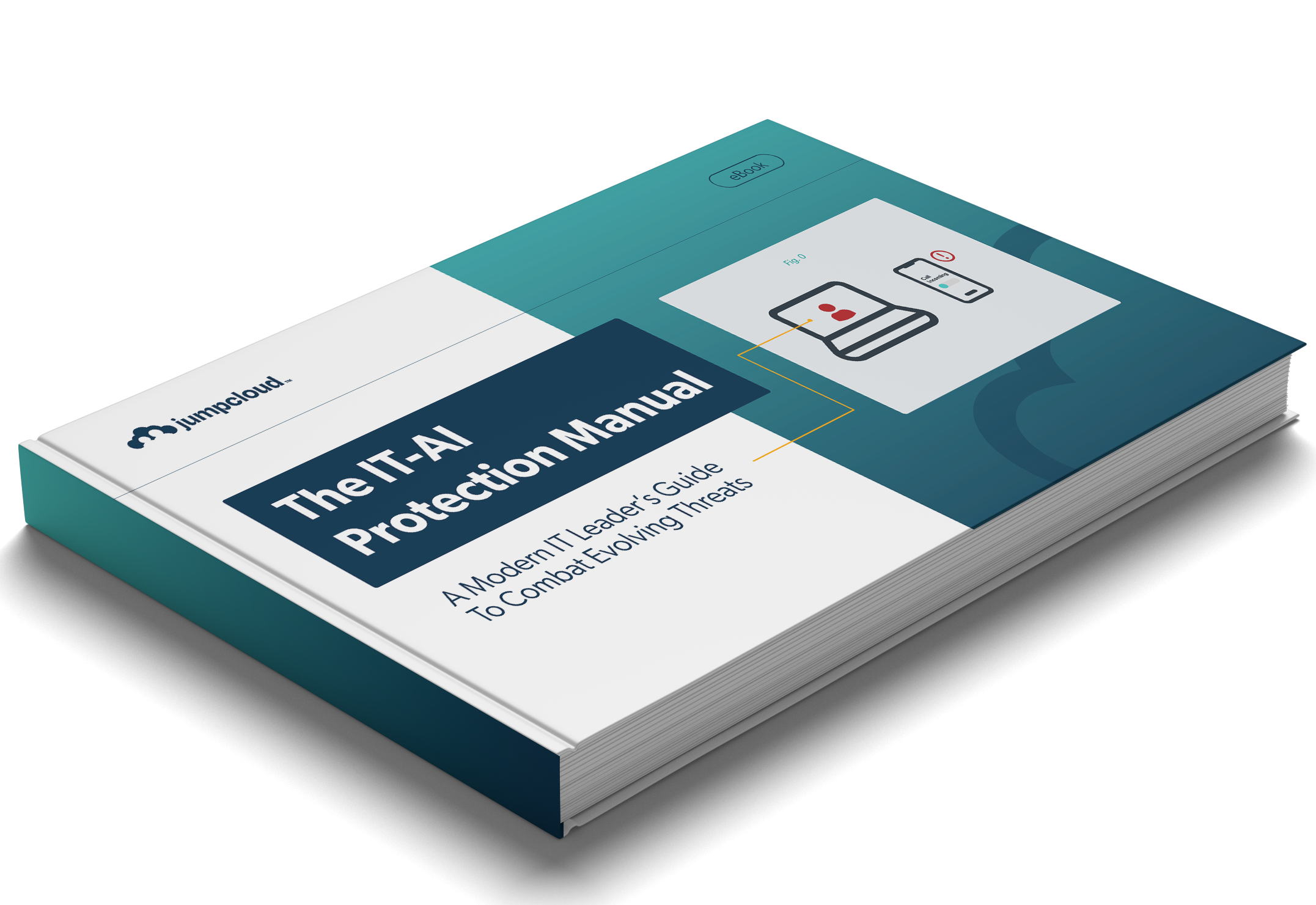
Want to learn how to defend against AI-enhanced threats like deepfake fraud, AI-powered phishing, and polymorphic malware? Our latest guide, IT-AI Protection Manual, provides a complete roadmap for building a more resilient security posture.
Ready to secure your business against the next wave of AI threats?