BEST PRACTICES
The Three IT Automation Levels to Secure, Simplify, and Scale
Is your IT struggling to scale? Discover the IT automation maturity framework that helps you move from manual chaos to unstoppable growth.

Who doesn't want to be the best? Learn more about the best practices of the identity and access management (IAM) space.
Is your IT struggling to scale? Discover the IT automation maturity framework that helps you move from manual chaos to unstoppable growth.
Learn 5 essential best practices—from phased deployment and MDM configuration to proactive security review—to ensure a smooth, secure, and compatible Apple rollout.

At first glance, JumpCloud can be a pretty technical product with a lot of moving parts to consider. That's why we made this easy-to-follow video.
Spreadsheets can’t keep up with your org’s growth. See the risks of manual IT management and discover smarter ways to manage devices, users, and access.

Turn Cyber Essentials & Essential Eight compliance into a competitive edge. Learn how your MSP can use these frameworks to standardize security and win.

Unchecked AI agents are a security risk. Learn the 4 red flags of a rogue AI and how to manage them with identity-first governance.

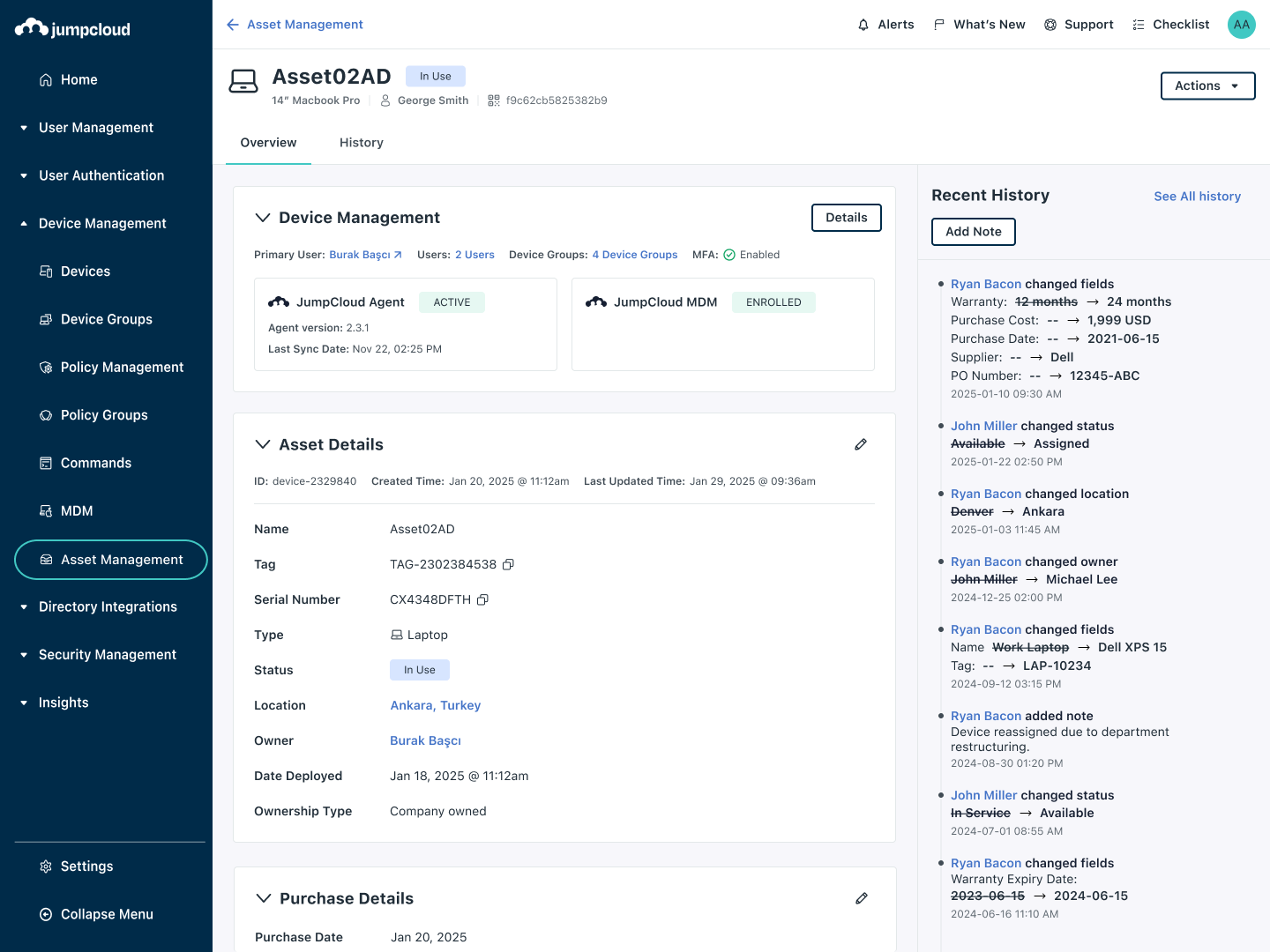
Learn the best practices for modern asset management, including automation, lifecycle tracking, and compliance, and see how JumpCloud helps you adopt them.
Learn why agentic AI needs identity-first governance. Discover how IAM and Zero Trust keep AI agents accountable, compliant, and secure.

Discover how AIOps transforms IT from reactive to predictive. Learn about its applications, benefits, and future in optimizing IT operations.

The perimeter is dead. JumpCloud CISO Bob Phan and Superbet CISO Jay Balan explain why a modern security architecture is a fundamental shift, not an update.

Learn how unifying IAM, device trust, PAM, and monitoring tools helps streamline Zero Trust implementation, reduce risk, and simplify policy enforcement.

macOS Tahoe is on the way. Learn what to expect from the new OS and get a step-by-step guide on how to prepare your Mac, ensuring a smooth, secure, and seamless transition.