


AI Agents Need Always-On Evidence
Why Compliance Has to Run Continuously in the Agentic Era
An audit often relies on sampling where an auditor examines a slice of your environment and infers the rest. But that inference only holds if the months between samples look the same.
AI agents break that assumption. An AI agent uses tools to take actions toward a goal. It might update records, change permissions, or run a workflow. And it can happen at any time, whether or not a human is at the keyboard managing it.
Our Q4 2026 Pulse Report, Enterprise AI Access Is Outpacing Control, found that 55% of surveyed organizations are already using or testing agents that can change systems, permissions, records, or workflows in their environments.¹ These are consequential actions, and the demand for proof is increasing right as evidence is becoming harder to produce.
A-LIGN’s 2026 Compliance Benchmark Report found that 97% of surveyed organizations now run at least two audits a year.² Compliance can no longer be treated as a once-a-year checkbox.
The prior approach was to assemble proof when an audit approaches. But a screenshot taken today doesn’t necessarily explain the permissions that existed yesterday or account for an agent that retired last month. The evidence you need encompasses a period of time. But the evidence you collect only describes a moment.
Continuous compliance closes that gap. It means running your controls as an ongoing practice and keeping evidence of how they worked over time. Identity, access, device context, and activity stay connected as your environment changes.
In this guide, you’ll learn why continuous compliance is so crucial in the agentic era. Keep reading to learn what continuous compliance looks like, the four places where point-in-time evidence comes up short once agents are in the picture, and what has to connect for continuous compliance to be real across your team’s environment.
What Is Continuous Compliance?
Continuous compliance means your controls run as part of your daily operations. You don’t go back and collect evidence on a once- or twice-a-year basis. You’re armed with it always, not just when an audit is on the calendar.
In a point-in-time model, evidence is something your team gathers. Someone pulls a report, takes a screenshot, and assembles a package against a deadline. When compliance is continuous, the evidence already exists and is something you can grab at any time. The systems enforcing your policies record what they did, when they did it, and why they did it on a running basis.

Why Is Continuous Compliance So Crucial for AI Agents?
Incorporating agents isn’t like adding new employees to your stack. Agentic identities push against three main assumptions point-in-time compliance depends upon.
-
1
The first major factor is pace. Human access changes at the speed of a hiring decision or with a role change. Agents work at machine speed, and can be provisioned and deprovisioned and given new access rights in between your audit collection dates.
-
2
The second factor is the human checkpoint. Audits assume actors in an environment approve or sign off on consequential work before it happens. That’s simply not the case with agents, at least some of the time. In our Q4 2026 Pulse Report, only 18% of organizations reported that they require human approval before high-risk agent actions.¹
-
3
The third factor is scope. Agents reach further into your environments than a lot of human users probably do. And teams are already feeling the consequences in a real way. In our Q4 2026 Pulse Report, 92% of surveyed organizations reported at least one AI-related incident or exposure in the past 12 months. Perhaps more telling: 36% have investigated a concern without being able to determine what AI accessed.¹
Without incorporating continuous compliance standards into your everyday processes, your team is stuck relying on manual work and tedious reconstruction. The pace and scope of agents means this just isn’t tenable anymore.
Four Compliance Gaps Exposed by AI Agents
Preparing for an audit was already an intensive, resource-heavy process before AI agents joined the workforce. But now that they’re here, sticking around, and working at a fast pace across crucial systems, compliance is more crucial and difficult than ever.
Here are the four biggest gaps to watch for, and why they’re problematic.
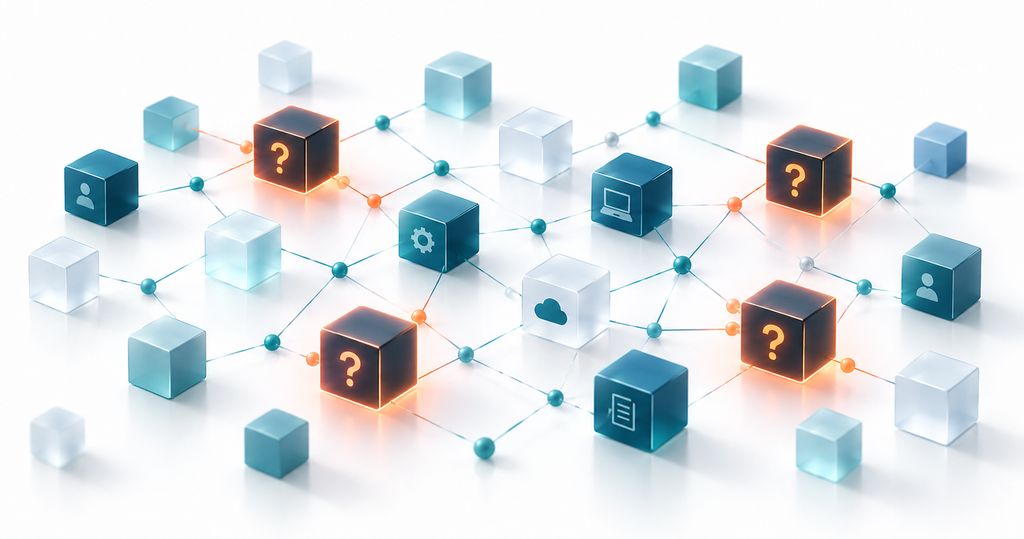
The Compliance & Audit Gap: Permissions Don’t Prove What Happened
Continuous compliance starts with a simple requirement: you should be able to show what your controls did, not only what they were set to do. A permission setting describes what an identity can do. An activity record describes what it actually did. Proving control means connecting both to the policy that applied at the time.
That connection is where most teams come up short. In our Q4 2026 Pulse Report, 72% of respondents reported a moderate-to-large gap between what their AI is permitted to access and what they can prove it accessed. Only 4% reported no meaningful gap.¹ For most respondents, an audit can confirm the permissions but not the activity.
Current Settings Leave Questions About the Past
Consider an agent that once had permission to edit customer records during a pilot, but then had its access narrowed. A screenshot taken afterward shows the narrower setting.
This point-in-time evidence doesn’t demonstrate the old, broader permissions that applied during the pilot, what the agent changed, or whether those changes followed policy. Answering those questions requires logs and records from the period in question.
Your auditors already think in terms of periods. For example, a SOC 2 Type II report covers a specified period rather than a single date. It includes the auditor’s tests of whether controls operated effectively across that period.³ Your records need to describe the changes that matter within that period.
Point-in-time evidence was always a partial answer. Agents have made that gap wider.

Connected Records Provide Clearer Answers
A log entry showing that an account updated a file supports one fact: the file changed. It doesn’t say which agent made the change, what access the agent had, whether a human authorized it, or whether the device it was working on met policy at the time.
Those details exist. They just live in different systems. Identity in one place, permissions in another, device state in a third, and the application log in a fourth. Each record is accurate on its own, but no single record answers the question by itself.
A connected record carries that context with the event. It shows the agent, the access it held, the human accountable for it, and the policy behind the action. One chain: not four fragments you assemble later. This is what makes evidence continuous instead of periodic. Human access shifts, devices fall in and out of compliance, and agents appear and retire between your collection dates. Unifying identity, device, and agent context in one place is what lets your records keep up with all three.
Many control frameworks are already asking for more than point-in-time snapshots. For example, NIST SP 800-53 calls for a continuous monitoring strategy (CA-7) and audit record generation for defined event types (AU-12).⁴
Only one in five organizations in our Q4 2026 Pulse Report have reached high maturity on AI auditability.¹ The question isn’t whether or not your auditor has asked you about agents yet. It’s whether or not your evidence could answer.
A record of permissions and a record of actions answer different questions. Continuous compliance connects both.
The Credential Governance Gap: Shared Credentials Can Obscure the Actor
When actions are taken across your environment, they must be traced back to an actor. This idea is older than agents…it’s why many organizations eliminated shared logins for employees years ago. Agents quietly brought shared credentials back, further obscuring who (or what) took an action in your environment.
Among organizations using or testing agents in our Q4 2026 Pulse Report, 63% still rely partly on higher-risk authentication, such as shared service accounts and long-lived API keys.¹ When several agents sign in under the same account, the log records the credential, not the agent behind it.
A Valid Credential Can Still Leave Ownership Unclear
Imagine two agents sharing one service account. One updates customer records. The other prepares sales forecasts. The application logs a successful change under the shared account.
The credential worked, but the account name alone can’t identify which agent acted, who approved it, or what task it was performing. Without a record tying the action to a specific agent, your team must reconstruct the answer from memory and context.
A long-lived key creates a different question: does its continued use still match the original purpose? Just because a key is old doesn’t mean it’s being misused. But with an absent owner, no defined scope, and no review history, the answer gets harder to find with each passing month.
Evidence Needs to Follow the Identity
Your environment includes human identities, non-human identities, and agentic identities. Like human users, your agentic identities need traceable actions and clearly established controls.
For a human employee, an access record may link back to a manager, a role, and an approval. An agent needs the same kind of chain: a clear purpose, level of access, and a person who’s accountable for it. When that chain is missing, every new agent becomes a separate investigation rather than a routine check.
Your audit trail needs to connect the credential, the agent, and its authority to act.
The Privilege Risk Gap: AI Agents May Have Access No One Is Monitoring
Continuous compliance affirms that access stays inside policy guardrails between audits. Agents make this difficult for two main reasons: they often get as much or more access than the people who deploy them, and their access often changes faster than teams can track manually.
What Least Privilege Means When the User Is an Agent
Least privilege for an employee is reasonably well understood. You scope access to the job, review it when the job changes, and remove it when the person leaves.
For an agent, each of those steps gets harder. Scoping access to the job means predicting the path an agent will take through an open-ended task. Narrow access limits the agent, so employees often grant broad access to make the work happen. There’s no role change to trigger an access review, and no offboarding event to trigger removal.
Our Agentic IAM Pulse Report found that 66% of surveyed organizations grant AI agents access equal to or greater than that of human employees.⁵
This is exactly why access needs to be granted, reviewed, changed, and revoked deliberately, with least privilege in mind and on a regular basis.
Scheduled Reviews Were Built for a Slower Population
Only 12% of organizations in our Q4 2026 Pulse Report describe their AI permissions as tightly scoped and easy to review.¹ Just 14% review those permissions continuously or automatically. Most review on a fixed schedule or only when a new tool arrives.
A biannual or yearly review produces an attestation that was true on the day it was signed. Agent access can change the following week, and the attestation won’t show it. This is the core limitation of point-in-time evidence applied to a fast-moving population.
-

12% describe their AI permissions as tightly scoped and easy to review
-
14% review AI permissions continuously or automatically
-
49% report AI permissions that are broad, difficult to review, or inconsistent.

Source: JumpCloud, Q4 2026 Pulse Report
When the Audit Trail Becomes the Last Line of Defense
Human oversight of agent actions is thinning quickly. In our Q4 2026 Pulse Report, 46% of organizations said they let high-risk agent actions run automatically and log them for later review.¹ That trade-off can be legitimate. Approving every action would defeat the point of deploying agents, and reviewing a reliable record afterward is a reasonable alternative. But only if those records are reliable.
Many organizations may not yet be able to name the agent behind a shared credential. So they’re trading a check that happens before the action for one that depends on evidence that isn’t fully there, or easy to access.
The Lifecycle Governance Gap: Access Can Outlast Its Purpose
Continuous compliance depends on governance that holds through the end of an identity’s life, not just its beginning. This is simple when you’re working with human users. An employee’s departure is an event your systems recognize, and it triggers a clear sequence: account disabled, devices recovered, access revoked.
Agents don’t have an equivalent. They aren’t hired, they don’t change roles, and they don’t resign. An agent’s project ending doesn’t necessarily reach the systems that govern its credentials.
Only 26% of organizations in our Q4 2026 Pulse Report reported that they govern non-human identities.¹ For many teams, there may be no one tracking when an agent has reached the end of its useful life.
A Human Departure Doesn’t Retire an Agent
Consider an agent created for a temporary reporting project. Its human owner could move to another team, the original project the agent was created for can end, and the agent’s service account still remains enabled.
The challenge here is that as humans leave and change roles, agent access isn’t necessarily shut off accordingly. Giving every agent a named owner helps with building your offboarding process, but it’s something that does need to be built intentionally. It’s not a box that’s inherently ticked off. This is what causes zombie agents to accumulate.

A zombie agent is an agent that remains active and credentialed after its purpose has ended. Its continued operation may look routine in an application log, even though the business reason for its access has expired.
This matters for continuous compliance because a zombie agent is a control failure that generates no signal. It doesn’t throw an error. It shows up as normal activity by a valid credential. Your evidence looks clean right up until someone asks what the agent is for and nobody can answer.
At review time, your team has two questions to resolve: Why does this agent still have access? What should happen to it? An unclear owner makes both questions difficult to answer.
Stopping a workflow and revoking its access are also separate actions. A retirement record should establish which credentials and permissions ended, and when. Records of past activity may still be needed after the agent itself is gone.
An employee’s offboarding ticket can be complete while the agents they created still have access. Each agent needs its own record of transfer or retirement.
Disconnected Records Make Continuous Compliance a Constant Catch-Up
These four gaps share a cause. Much of the evidence may already exist in your environment, but it’s scattered across disconnected, siloed systems. It’s a copy-and-paste project riddled with manual reconstruction work.
Say an agent changed a business record on Tuesday, and someone asks whether that action was authorized. The agent’s identity lives in one system. Its permissions live in another. The application recorded the change. The approval sits in a ticket.
Every fragment is accurate. Your team still has to show that the evidence describes the same actor, the same action, and the same policy decision.
Someone Has to Join the Records
Matching records requires consistent identifiers and timestamps. Current account settings show what’s in place right now. They don’t necessarily prove past permissions.
When those connections are missing, your team searches logs, checks tickets, and asks owners to explain the sequence. Then the next auditor asks a similar question about a different date, and the process starts all over again.
Hyperproof’s 2026 benchmark found that 76% of GRC and cybersecurity professionals spend 30% or more of their time on repetitive administrative tasks.6 Rebuilding an agent’s access history by hand is exactly that kind of work. It takes away from the strategic, judgment-heavy projects only your team can do.
Repeated Audits Multiply the Demand
The demand for more proof is already here. With 97% of organizations running at least two audits a year,2 providing evidence for each one becomes a standing, always-on motion. Not a one-time project.
Capturing the full context of an agent’s activity in a connected log creates a chain of records you can reuse. This connected evidence can support an audit, a security review, and an internal access decision — without requiring three separate reconstructions.
Rebuilding agent records across several systems adds work every time someone asks for proof. Connected records give your team context, without manual pulls.
What Makes Continuous Compliance Real
Making your compliance practices a continuous motion isn’t simply about collecting more logs. It’s about establishing connections between them.
A connected model ties access decisions to the conditions and activity behind them. Identity, device health, privileged access, and agent actions can resolve to one unified audit trail. That matters most at the enforcement layer, where systems allow or deny access. Collecting events afterward can help explain what happened. It can’t retroactively enforce a policy that was absent at the time. A connected trail also depends on log retention and export settings that cover your audit period, and on activity logs from the applications agents act in.
Unification is what holds that context together. Buying several products from one vendor doesn’t necessarily create it. Separate systems can produce a connected trail, but only if they reliably exchange and keep the same identity and policy context.
For commercial IT teams, the payoff is practical: less time spent rebuilding the same answer. Controls still need owners, review, and follow-through, while connected evidence gives that work a record your team can use more than once.
The real measure of unification is whether you can explain an event with its original context intact.
Proof Is What Lets AI Move Faster
Continuous compliance isn’t a brake on AI adoption. It’s what keeps adoption moving.
An auditor asks what an agent did on a Tuesday last month. You can answer that in an afternoon or spend three weeks reconstructing the evidence. The difference isn’t how carefully your team works. It’s whether the context was captured when the action happened or has to be rebuilt afterward.

That’s what continuous compliance is for. Point-in-time evidence captures a moment that has already passed. Connecting identity, access, device context, and agent activity as it happens describes the environment you actually run. It gives you proof on the day someone asks, not three weeks later.
When you can show what your agents did, you don’t have to slow them down to find out.
Make continuous compliance part of your everyday IT work with JumpCloud. Schedule a call with an expert to see how you can link identity, device health, and privileged access together.
Enterprise AI Access Is Outpacing Control
How does your AI auditability stack up to other commercial IT leaders? Get the full picture in our comprehensive research report.
Read now!
About JumpCloud®
JumpCloud® is the AI-powered identity infrastructure that unifies lifecycle management for humans, devices, and autonomous agents. JumpCloud gives IT teams visibility and control across identities and access points to cut complexity, automate secure workflows, and put AI to work safely. Secure every identity. Human or not. Intelligent, secure IT for the agentic era.
Learn more: jumpcloud.com/
Follow us: Blog | Podcast | X | LinkedIn | YouTube | Resources
Sources
- JumpCloud, Enterprise AI Access Is Outpacing Control (Q4 2026 Pulse Report). Published October 7, 2026. Survey of 250 IT decision-makers in the U.S. and U.K., split evenly between Google Workspace-primary and Microsoft 365-primary organizations.
- A-LIGN, 2026 Compliance Benchmark Report. Published January 28, 2026. 1,043 global respondents (85% headquartered in the U.S.), surveyed August to September 2025 by an independent third-party research firm.
- A-LIGN, What’s the Difference Between SOC 2 Type I and Type II?. Published February 1, 2021; last updated April 2, 2025.
- National Institute of Standards and Technology, SP 800-53 Rev. 5, Security and Privacy Controls for Information Systems and Organizations. Published September 2020, updated December 10, 2020; Release 5.2.0 issued August 27, 2025. Controls CA-7 (Continuous Monitoring) and AU-12 (Audit Record Generation).
- JumpCloud, The Agentic IAM Pulse Report: Closing the Governance Gap to Accelerate with AI. Published May 5, 2026. Survey of 261 IT, security, and identity decision-makers at organizations with 200 to 2,500 employees in the U.S. and U.K.
- Hyperproof, 2026 IT Risk and Compliance Benchmark Report. Published February 12, 2026. Survey of 1,002 GRC professionals, conducted at the start of 2026 per Hyperproof