



Easy and Affordable Sales & Marketing Basics for MSPs
What’s Next When You’ve Outgrown Word-of-Mouth Acquisition?
An MSP’s biggest problems…
24%
say it’s acquiring new clients
29%
say it’s competition
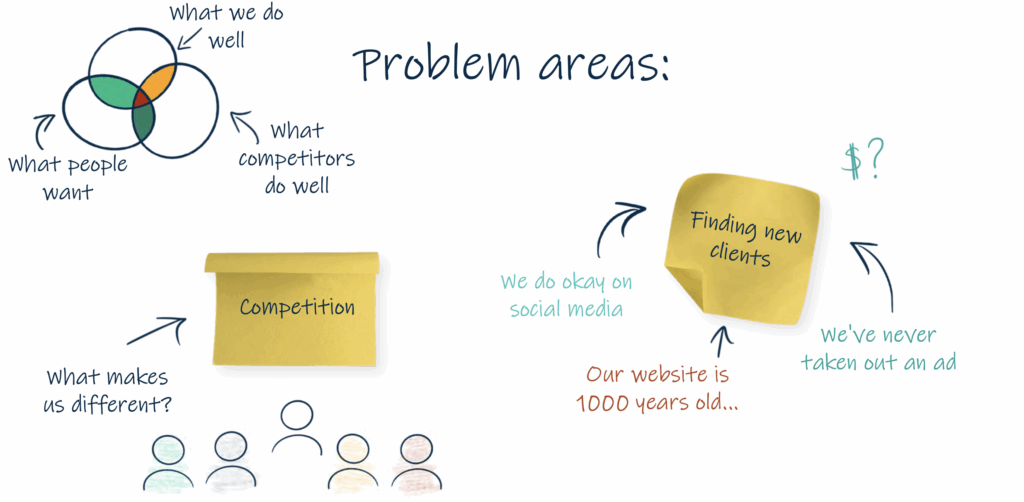
Sales and marketing are common challenges for managed service providers (MSPs). As an MSP, getting your name out there and differentiating yourself is a constant challenge.
Most MSPs start out with word-of-mouth marketing, which works great — until it doesn’t. Referral-based marketing is limited in scope. Before long, you’ll find yourself faced with diminishing returns.
So, what’s next?
When you aren’t equipped with entire departments devoted to sales and marketing, it can be hard to know how to expand.
This ebook is here to help with exactly that. It’s an MSP sales and marketing guide for the non-marketer. It’s designed to provide actionable and accessible guidance around basic practices that will yield big returns without a huge upfront investment.
This ebook will provide:
- A high-level understanding of some fundamental marketing principles. These are critical, and they can take you a long way.
- A checklist to get you started with the basics. These are easy and free things you can do that will make a big impact and form a great foundation for your marketing efforts.
- Tips for requesting marketing support from partners. They may be able to help with more than you realize.
Note: While sales and marketing are closely connected, we’ll focus more on marketing in this guide, as it’s the first step to building the wider audience you need to acquire more clients.
Part 1: Embrace a Marketing Mindset
Thinking like a marketer
You downloaded this ebook for a reason: you need your marketing to do more.
One of the hardest — and most important — steps to changing that is adjusting your mindset. Marketing is an unfamiliar motion for many MSPs. If you put on your Marketer Hat without first removing your Day Job Hat, you’ll end up with conflicting ideas and a marketing hat that keeps sliding off. This is a common reason MSPs give up on marketing too quickly: they hadn’t fully committed to it in the first place.
As you move forward, we invite you to take off your everyday hat so you can approach marketing with an open mind. Read on to learn a few simple — but critical — principles to successful marketing.
Know who you are
Marketing requires a strong, consistent message. If you describe yourself in different ways at different times, you’ll create an inconsistent message that doesn’t stick.
To develop a consistent brand identity, consider a few core questions:
What does your company do?
It’s easy to list all your services; now see if you can boil it down to one or two sentences. It’s harder than it sounds — but once you’ve done it, you’ve got the core of your consistent message.
Why does your company do it?
A mission statement can be a compelling differentiator in a competitive market. Establishing your why can help audiences connect with you and remember you. Mission statements should be short — shoot for one sentence.
Know who your audience is
Knowing your audience is critical to successful marketing. Think about the clients you generally serve. Who is usually your point of contact — is it the CEO? The office manager? An IT admin? Knowing this will ensure you’re always speaking your audience’s language.
In addition, make sure you know the types of businesses you want to go after. Maybe you work with law offices exclusively, or companies with retail fronts, or any local business with less than 50 employees. Make sure you know your target industries and company types so you can go after the right ones.
Put on their shoes

One of the most common marketing missteps is not thinking like the audience. Learning to do this is easy, free, and will make a HUGE impact on your marketing. This is a common weak point in the MSP industry; rising above this challenge will cause you to outshine much of your competition.
Whenever you’re communicating with your audience, put yourself in their shoes. Ask yourself how they might understand and respond to what you say. For example, your audience probably isn’t as technically savvy as you and your team. Phrases with jargon or deeply technical terms might not resonate with them.
Awareness matters
The first step of gaining new customers is introducing yourself to them. We refer to this as building awareness: if you want a wider pool of potential customers, you need more people to be aware of your business.
Building awareness takes time. When you invest in something, it’s hard not to want immediate results. But with marketing, we urge you to be patient. The ROI on marketing efforts can be long — but if you stick with them, the long-term gains can be massive.
Part 2: Start with the Basics
They’ll take you a long way
We’ve established the importance of first impressions and building brand awareness. The first steps we recommend you take are ones that contribute to that fundamental goal. The following steps will help you build a strong marketing foundation. They’re designed to be easy and actionable, and they can deliver huge returns on your marketing efforts.
☑ Website
Your website is your most important tool. Invest in it.
Your website will be most people’s first touchpoint with your company. Think of it as an initial handshake or a first-round interview. Impression matters. To make a good impression, your website must be:
- Current.
- Easy to access on desktop and mobile devices.
- Aesthetically pleasing.
- Clear and engaging.
Slip-ups in any of these fundamental areas can make the difference between gaining a new customer and turning one away.
Quick, easy, and affordable tips:
-

Use a website template: They make websites look polished, and they’re easy to update. You should only invest in a custom website build if you are confident you can pay for ongoing updates or in-house expertise. Otherwise, you’ll quickly end up with an outdated site.
-
Edit down: Avoid wordiness. Use headers and bulleted lists where appropriate.
-
Mobile-friendliness is a must: Make sure the template you choose optimizes your site for mobile. When editing your site, preview every page using the mobile layout feature to make sure everything aligns properly.
-
Always speak to your audience: Make sure you’re addressing their problems, not just listing features and specs.

Pro tip: To see how your website might be received, ask a family member or friend to read your homepage. Then ask them to summarize what your company does. If they don’t get it right, neither will your prospects.
☑ Social Media
Be friends with your socials
Social Media It’s okay if you’re not a big social media user in your personal life, but many customers expect to interact with brands on social platforms. Just like building your website to make a great first impression, we recommend you establish your company’s presence on social media. It will help position your company as legitimate, trusted, and personable. It can also provide prospects with another, possibly easier channel for them to learn about you and connect with you directly.
Quick, easy, and affordable tips:
-
Set up your profiles: Get started by setting up your accounts correctly: make sure your company name is the same everywhere, the logo looks right, and descriptions and locations are up to date.
-
Prioritize LinkedIn: While it can be helpful to build your presence on many channels, LinkedIn will likely be your main business driver.
-
Don’t be afraid to share your expertise: You are the expert, and people want to hear your perspective.
-
Highlight your clients: People love to see others on social media. Showcase your success by spotlighting loyal clients.
-
Join relevant groups: Join groups relevant to your audience (like local, vertical-specific groups) to expand your network in relevant circles.
Pro tip: Your social content doesn’t have to be perfect. People expect to see homegrown, “low-budget,” and DIY content on social media, so it’s okay if your content isn’t professionally polished.
Don’t let the fear of imperfection prevent you from tapping into this important resource.
☑ Listings & Reviews
Get your listings and reviews in order
Review sites, maps, and other listing sites are common ways people shop today. Your listings are important factors that influence the way your audience views your brand and, ultimately, their decision to convert (or not). This is especially important if your target audience is within your geolocation as many websites, apps, and search engines prioritize local listings when users are searching for services.
Quick, easy, and affordable tips:
-
Make sure you’re listed correctly on map and review sites: This includes claiming and verifying your business as well as ensuring data like your hours, phone number, address, and website are listed accurately.
-
Tap into your customers: A quick survey asking where your customers found you can help you identify where your customers tend to shop so you can optimize your listings in those places.
-
Respond to some reviews: Show gratitude towards the glowing ones, and keep your tone respectful and professional for the negative ones. Requesting a followup to clarify or rectify problematic reviews can demonstrate your commitment to customer service.
-
Ask clients to leave a review: This will help build legitimacy and trust.
☑ Identify the “what”
Understand what you should market
First-time customers rarely know exactly what they want at first. Even more rarely do they know how to describe it in industry terms. While simply promoting all your services can be tempting (why not cover all your bases?), this likely won’t resonate with these customers.
Instead, market solutions to customers’ problems. That’s how potential customers usually start their buyer’s journey — they identify a problem or need. Maybe they’re growing too fast for their single IT admin to keep up, or their systems are too outdated to support new technology they need. Focus on speaking to the challenges and solutions common to your audience to strike the right chord with them.
This is also a good vantage point to use when crafting service offerings, or “packages.” If your packages speak to the problems you are intending to solve, your audience will be more receptive to each line item contained within.
Quick, easy, and affordable tips:
-
Consider your audience and goals: Your first instinct may be to promote your highest-revenue package. This may work, but you’d need to make sure this strategy aligns with your goals. If your biggest goal is new customers, you might consider marketing a lower-tier package that new clients usually start with instead.
-
Market to your existing clients differently: Ask yourself: do new clients usually start on this package? If not, you might want to run an upsell campaign to promote it to existing customers instead. You can lean into your existing relationship more effectively with existing (happy) clients to attain higher revenue goals.
-
Avoid getting too deep into features and specs: That should be a conversation that happens with Sales unless your audience is unusually tech-savvy.
☑Identify the “who”
Segment your audience
In Part 1, you started thinking about your target audience — what types of people and businesses are your clients? But you can go a bit deeper here. Start thinking about your audience in smaller segments. When you segment your audience, you can target them more precisely.
Choosing to market to one audience segment may seem unwise, because it alienates potential customers who don’t belong to that group. However, the more specific your targeting, the more effective your marketing. Think about it: you downloaded this ebook on sales and marketing for MSPs because the guidance is specific to you. Would you have downloaded it if it had just been titled “Sales and Marketing Guide?” People are drawn to things that pertain to them.
Quick, easy, and affordable tips:
-
Common ways to segment your audience:
- Size
- Industry
- Point of contact role (business owner vs. IT admin, for example).
- Revenue/budget
Example: Let’s say you have healthcare clients that need help with their electronic health record system (EHS) and law office clients that often need cloud transformation services. In this case, you could run one campaign offering EHS support to healthcare offices in your area, and another one marketing cloud transformation to law offices.
Part 3: Work With Your Vendors
They can help with more than you may think.
Your partners and vendors may be more willing to help than you realize. Your vendors’ success is intricately tied to yours, and many MSPs don’t realize how many resources their vendors are willing to provide, from creative assets to funding. Your vendors may be able to help in the following ways:
This can be anything from individual, co-brandable pieces to an entire campaign in a box. Ask what your vendors have available, and check their portals for ready-made content.
Vendors will likely have in-house design resources and talent that you can leverage to put some polish on a written piece. This is a great practice for case studies, which are great ways to showcase the real-life benefits of your services.
Volunteer to participate in a case study with a vendor you appreciate. In addition to strengthening your partnership, this can help you get more visibility via your vendor’s networks and channels.
Your vendors may have people in your region whose job it is to support their partners with events, collaboration, and more. Inquire to find out if there’s anyone in your area who you could connect with.
Your partners are often willing to help with funding directly. Many MSPs don’t take advantage of this. We encourage you to inquire with your vendors about funding opportunities, either in general, or for help with any of the marketing efforts outlined in this eBook. You may be surprised by how much they’re willing to support you.
Grow Your Business with JumpCloud
JumpCloud is an easy-to-learn and easy-to-use identity and access management platform for MSPs. With JumpCloud, you can expand your offerings while growing your revenue, increasing efficiency, and enforcing stronger security. JumpCloud always works with its partners to help them succeed, from onboarding to ongoing marketing efforts.
Learn More